

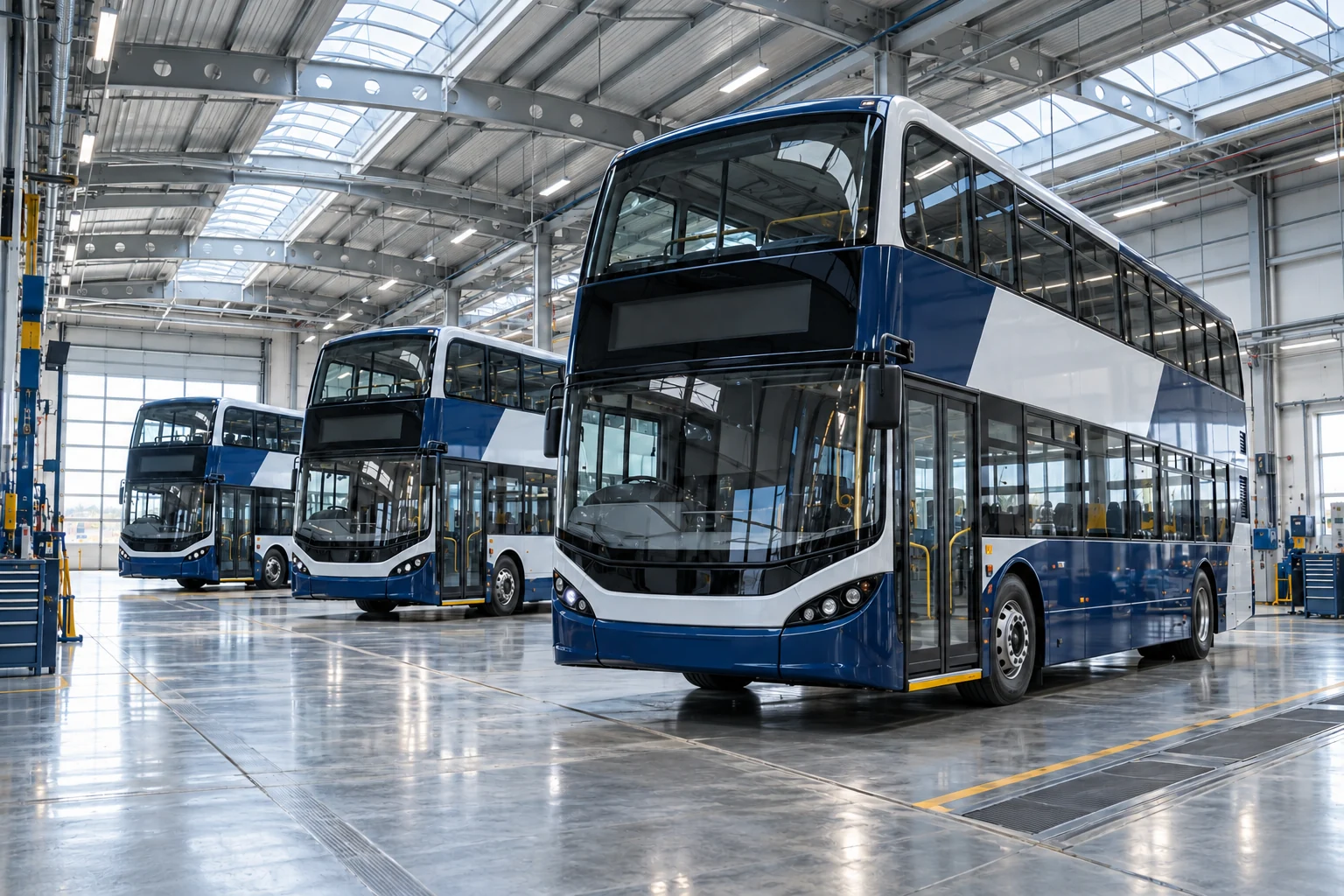
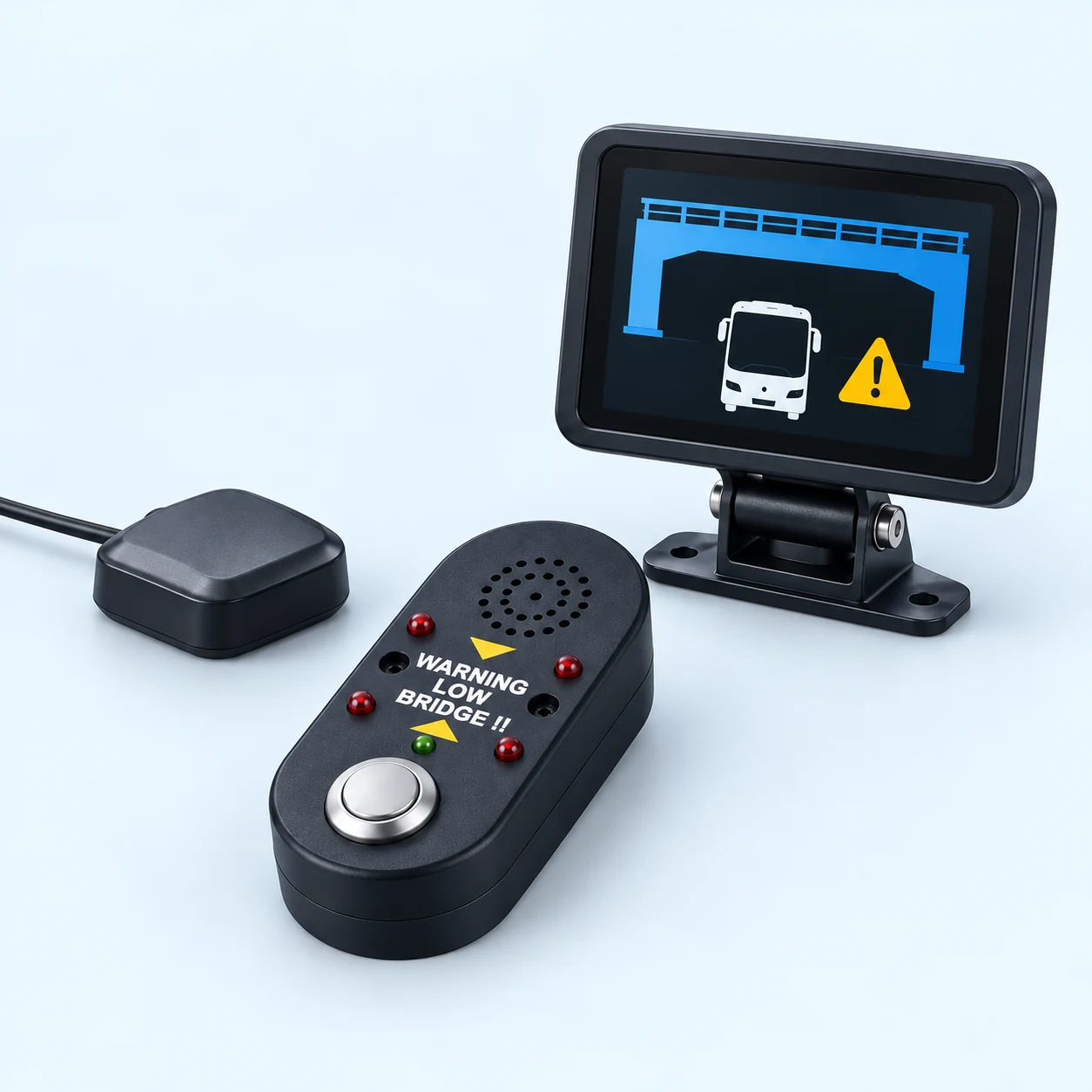
Illustrative equipment. Final specification varies by vehicle.
THE SYSTEM AT A GLANCE
An earlier warning for the driver.
GPS-based alerts set to the vehicle’s height, with sound and a visual warning.
- Vehicle height
- GPS & bridge data
- Cab warning
Set the height
Configure for the individual vehicle.
Identify the approach
GPS position and bridge data inform warnings.
Alert the driver
Audible and visual alerts in the cab.
Specification & installation details
- System selection
- Choose a compatible low bridge warning solution around the vehicle and existing equipment.
- Cab equipment
- Warning device, sounder and any supported driver display, positioned for the driver.
- Configuration
- Vehicle height, GPS input, warning settings and the bridge data used by the selected system.
- Installation and maintenance
- Fit and test the equipment, then agree support and the approach to software and data updates.
- Driver use
- A warning aid. Route planning, vehicle height checks and attention to road signs remain essential.
Common questions.
Can it work with our existing recorder?
Share the recorder model and software version. We check whether the selected warning system can integrate with it and what other equipment is needed.
Does it scan or measure the bridge?
The solutions described here use GPS position and bridge data with the configured vehicle height. They do not measure the clearance of a bridge in real time.
Does it replace route planning or driver checks?
No. The driver and operator must still check vehicle heights, plan suitable routes and follow road signs.
Can SURE retrofit and maintain it?
We assess the existing equipment and vehicle, install a compatible system, verify the warning functions and agree ongoing maintenance.
SPECIFY · INSTALL · MAINTAIN